Owner guide · Buying
Buying a used WRX or STI
Buying a WRX or STI is exciting, but a bad one can cost more than the car. Most of the expensive problems can be spotted with a careful look, the right questions and a couple of tests. Take this checklist with you, and bring a friend who knows Subarus.
At a glance
Compression test
The best money you will spend before buying.
Timing belt
No dated invoice means budgeting for a belt straight away.
Ask the club
Many cars in Ireland are known to members. Ask in the forum.
Paperwork first
- Service history: oil changes on time, and a dated invoice for the timing belt. No proof means budget for a belt straight away.
- History check: finance, write-off and mileage records. For imports, the auction sheet or export certificate.
- The chassis number on the car matches the paperwork, and the model code is what the seller says it is (see our chassis codes guide).
- If the car is modified: who mapped it, on what fuel, and with what parts. Ask for the invoices.
Engine
- Cold start: ask the seller not to warm the car up before you arrive. Listen for knocking or ticking, and watch for smoke.
- A deep knock that changes with revs or load can mean worn big-end (rod) bearings: walk away or budget for an engine.
- Blue smoke, oil use or a misfire on 2.5-litre EJ255/EJ257 engines can be cracked pistons (ringland failure), often from knock or a bad map.
- A compression or leak-down test is the best money you will spend. All four cylinders should read close to each other.
- Oil leaks from the cam covers and sump are common and usually cheap; coolant loss or overheating is more serious.
- Check the oil level and condition. Very low or sludgy oil says a lot about the owner.
Turbo, boost and exhaust
- Smooth, strong boost with no hesitation or misfire.
- No blue smoke on boost, and no siren-like whine.
- Ticking on cold start can be a cracked manifold or a leaking up-pipe joint.
- A decat or loud exhaust may need changing back before the NCT.
Gearbox and drivetrain
- Grinding going into 2nd or 3rd (very common on 5-speed WRXs) means worn synchros.
- Jumping out of 5th on a classic is often the rear nut on the gearbox: a fixable fault.
- Whine from the rear that changes with road speed is the diff.
- Clunks when getting on and off the throttle point to driveshafts, diff mounts or worn bushes.
- Check DCCD cars for warning lights and binding on tight, slow turns.
- A slipping or very heavy clutch: budget for a clutch kit.
Body and rust
- Rear strut tops and inner arches (especially classics): the most serious rust spot, and expensive to repair properly.
- Rear wheel arches and sills.
- Under the front and rear bumpers and around the radiator support.
- Uneven panel gaps and wavy panels point to accident damage: check the chassis legs.
- Imports from snowy parts of Japan can be rusty underneath despite low mileage.
Suspension, brakes and wheels
Before you hand over money
- Get a specialist inspection or, at the very least, a compression test.
- Ask in the forum: many cars in Ireland are known to the club, and someone may know its history.
- Budget for an immediate service, timing belt and fluids if the history is thin.
More guides
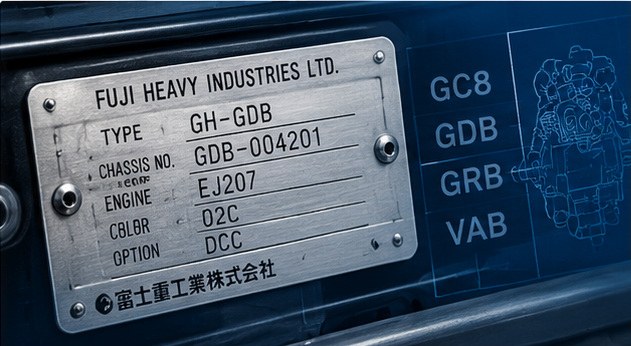
Impreza chassis and model codes explained
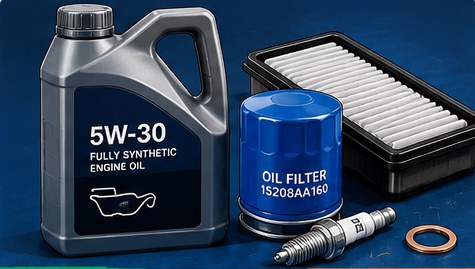
Subaru Impreza service guide

Importing a Subaru to Ireland
Got a question? Ask the club
Subaru owners have been sharing know-how on the ISDC forum since 2000. Post your question and someone will have been there before.